AIDA Conference 3-5 June 2026
AI and Digital Assets in Energy and Finance
AIDA Conference 3-5 June 2026
AI and Digital Assets in Energy and Finance
Venue: Bucharest University of Economic Studies, Bucharest, Romania
Registration link (free): https://forms.gle/TXVGX2SdvzuAB8LR6
Spaces are limited, so please register early to secure your place.
Zoom link: https://ase.zoom.us/j/98597769707?pwd=4AGQ1WLL4oluJIbZbjQNvfvEGZLH0a.1
About the Conference
The Bucharest University of Economic Studies, through the IDA — Institute for Digital Assets and the AI4EFin — Artificial Intelligence for Energy Finance Research Group, is proud to host the AIDA Conference — AI & Digital Assets in Energy and Finance.
This conference is dedicated to advancing the rigorous statistical and theoretical understanding of two rapidly evolving fields: digital assets and energy finance. It aims to convene leading academics to address critical open questions and deepen our analytical frameworks for these transformative domains in finance and beyond.
The conference will explore key directions and foster discussions on the following pivotal areas:
Microstructure and Granularity of Digital Assets
How do we formally characterize and model the discrete, often indivisible, units of digital assets? What are the implications of this granularity for market microstructure, price formation, liquidity, and order book dynamics, especially in the absence of traditional market-making structures?
Statistical Modelling of Digital Asset Returns and Volatility
What novel statistical models are required to capture the heavy-tailed distributions, jumps, and regime-switching behaviors observed in digital asset prices? How can we effectively model and forecast their often extreme volatility, considering the unique informational and transactional characteristics of blockchain data?
Network Effects and Interdependencies
How do the underlying distributed ledger technologies and network effects influence the statistical properties of digital assets? What methodologies can be employed to quantify and model the complex interdependencies between different digital assets, protocols, and the broader financial ecosystem?
Risk Management and Portfolio Optimization in Digital Asset Markets
Given the distinct statistical properties and operational risks associated with digital assets, what robust statistical frameworks are necessary for effective risk measurement, stress testing, and portfolio optimization? How can traditional risk models be adapted — or new ones developed — to account for the unique characteristics of this asset class?
Causal Inference and Mechanism Design in Decentralized Finance (DeFi)
How can statistical inference be applied to understand the causal impact of various protocols, governance mechanisms, and economic incentives within the DeFi landscape? What statistical tools are appropriate for analyzing and designing efficient and robust mechanisms in decentralized environments?
AI-Driven Modelling and Forecasting in Energy Finance
How can artificial intelligence and machine learning methods improve the modelling, forecasting, and risk management of energy markets? What novel approaches — including neural forecasting, large language models, and multimodal AI — can capture the complex dynamics of electricity prices, carbon markets, and renewable energy integration? How do digital assets and blockchain-based mechanisms intersect with energy trading, green finance, and the transition to sustainable energy systems?
Electricity Price Forecasting and Market Design
How can advanced machine learning and deep learning architectures improve short-term and long-term electricity price forecasting? What role do neural forecasting models, transformer architectures, and hybrid approaches play in capturing the complex seasonality, spikes, and negative prices characteristic of modern electricity markets?
Renewable Energy Integration and Grid Analytics
How can AI methods address the challenges of integrating intermittent renewable energy sources into power grids? What novel forecasting and optimization techniques can improve the management of solar, wind, and storage assets, and how do these interact with energy trading strategies?
Blockchain and Digital Assets in Energy Trading
How can blockchain technology and tokenization transform energy trading, peer-to-peer energy markets, and renewable energy certificate systems? What are the implications of decentralized energy markets for market efficiency, transparency, and the energy transition?
This conference seeks contributions that push the boundaries of current statistical and theoretical methodologies. We invite researchers to engage in discussions that will lay the groundwork for a more profound and statistically grounded understanding of these transformative fields.
All participants are invited to submit to the DFIN Journal, Springer Nature
Keynote speakers
Matthias R. Fengler
From Digital Transactions to Real Spending: Insights from a Novel Consumption Index for Switzerland
Matthias Fengler is Professor of Econometrics at the School of Economics and Political Science at the University of St. Gallen (HSG). He studied at the Eberhard Karls University in Tübingen, the University of Mannheim, UC Berkeley, and the Humboldt-University in Berlin. His research focuses on asset pricing, volatility modeling, risk-management, and the analysis of financial text data. Together with colleagues from academia and industry, he runs the project Monitoring Consumption Switzerland and has recently launched the Consumer Spending Index (CSI) for Switzerland.

Rafał Weron
Machine learning for electricity price forecasting
Rafał Weron is Professor of Economic Sciences at the Wrocław University of Science and Technology. He is a member of the Center for Research in Energy (CoRE) at Aarhus BSS, Denmark, and the Academia Europaea. With a Ph.D. (1999) in Financial Mathematics and a habilitation (2009) and professor title (2015) in Economic Sciences, he is one of the leading world experts on energy forecasting. His other research interests include computational economics, computational statistics and machine learning, financial engineering and risk management. He is the author of five books and 100+ peer-reviewed book chapters and journal articles, including Hot and Highly Cited Papers.

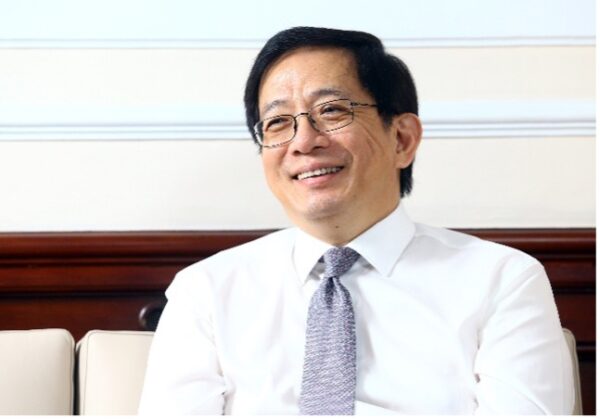
Large-Scale Multiple Inequality Testing without Data Snooping Bias
Chung-Ming Kuan is an economist. He obtained his Ph.D. in Economics from University of California, San Diego, in 1989. Kuan specializes in econometric theory and applied econometric analysis. He was an Assistant Professor and Associate Professor with tenure at the Department of Economics at University of Illinois at Urbana-Champaign. After returning to Taiwan, he served as Professor of Economics at National Taiwan University (NTU), and a Distinguished Research Fellow and the Director of the Institute of Economics at Academia Sinica. Kuan was an Associate Editor for several econometrics’ journals, including the J. of Econometrics, and elected as Academician of Academia Sinica in 2002. Kuan also served as a Minister in the cabinet during 2012-2015 and the President of NTU during 2019-2023. He is now an NTU Chair Professor.
Programme:
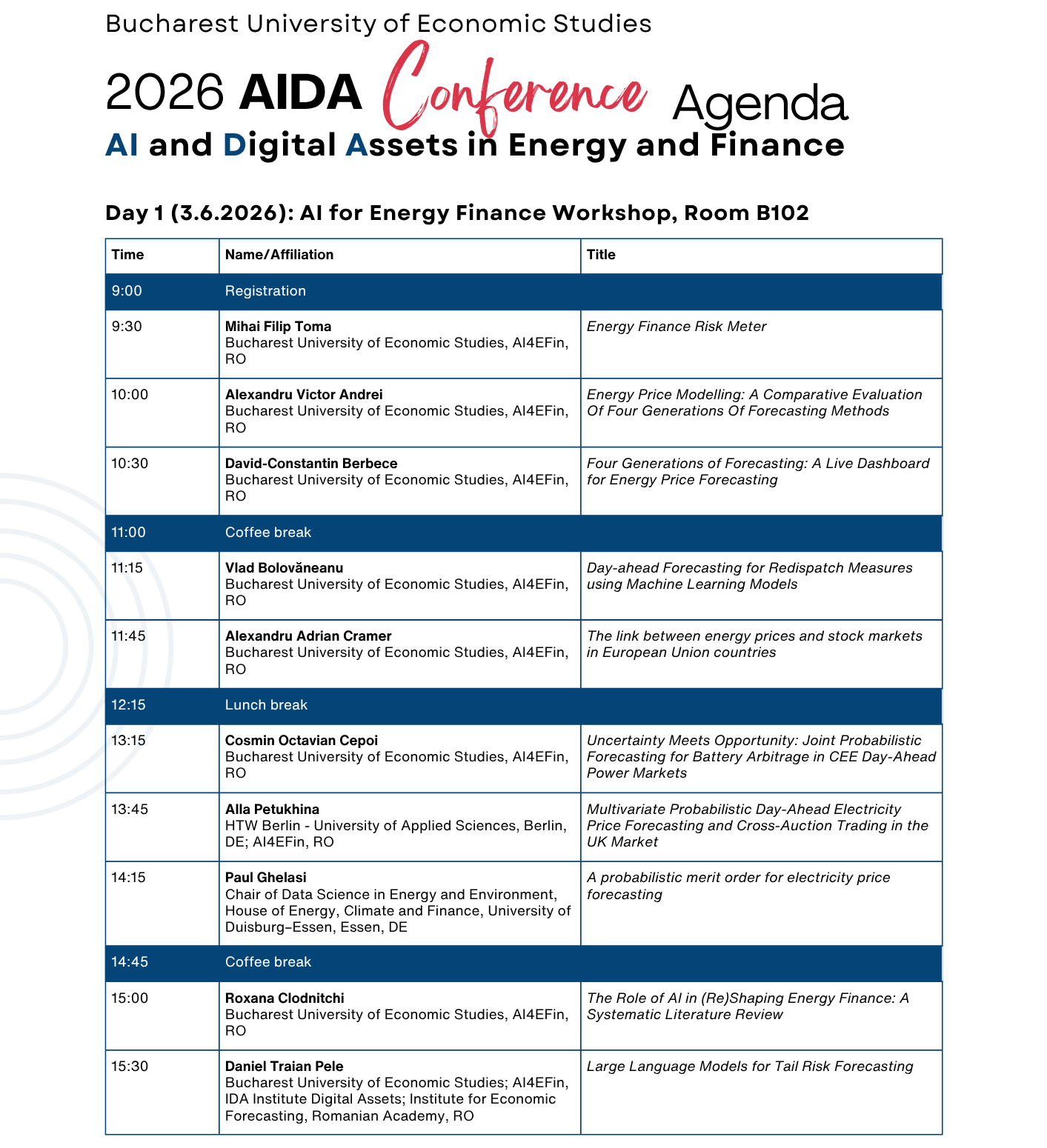
Day 1 (3.6.2026): AI for Energy Finance Workshop, Room B102
Day 2 (4.6.2026): Official ceremony, Aula Magna
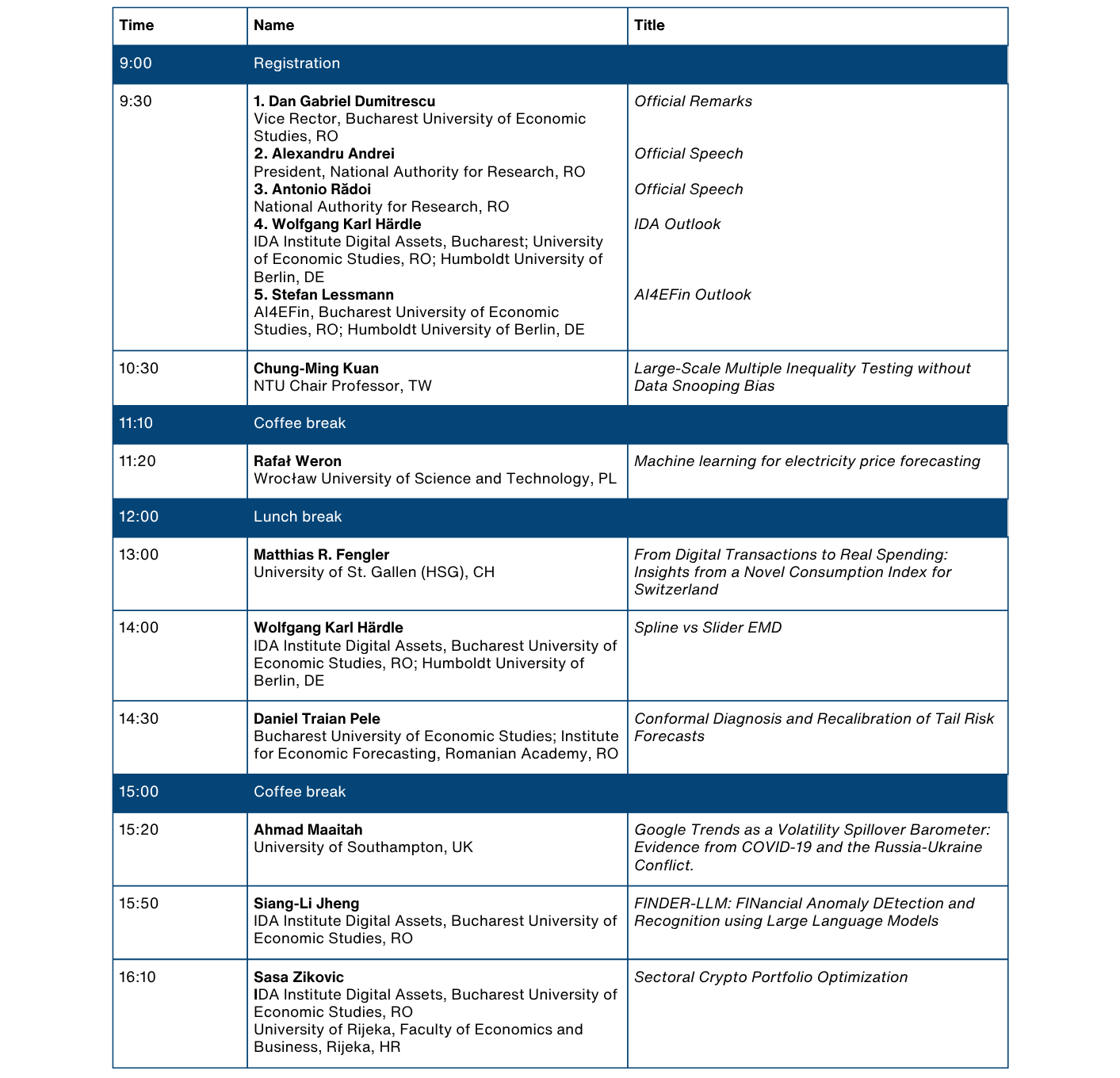
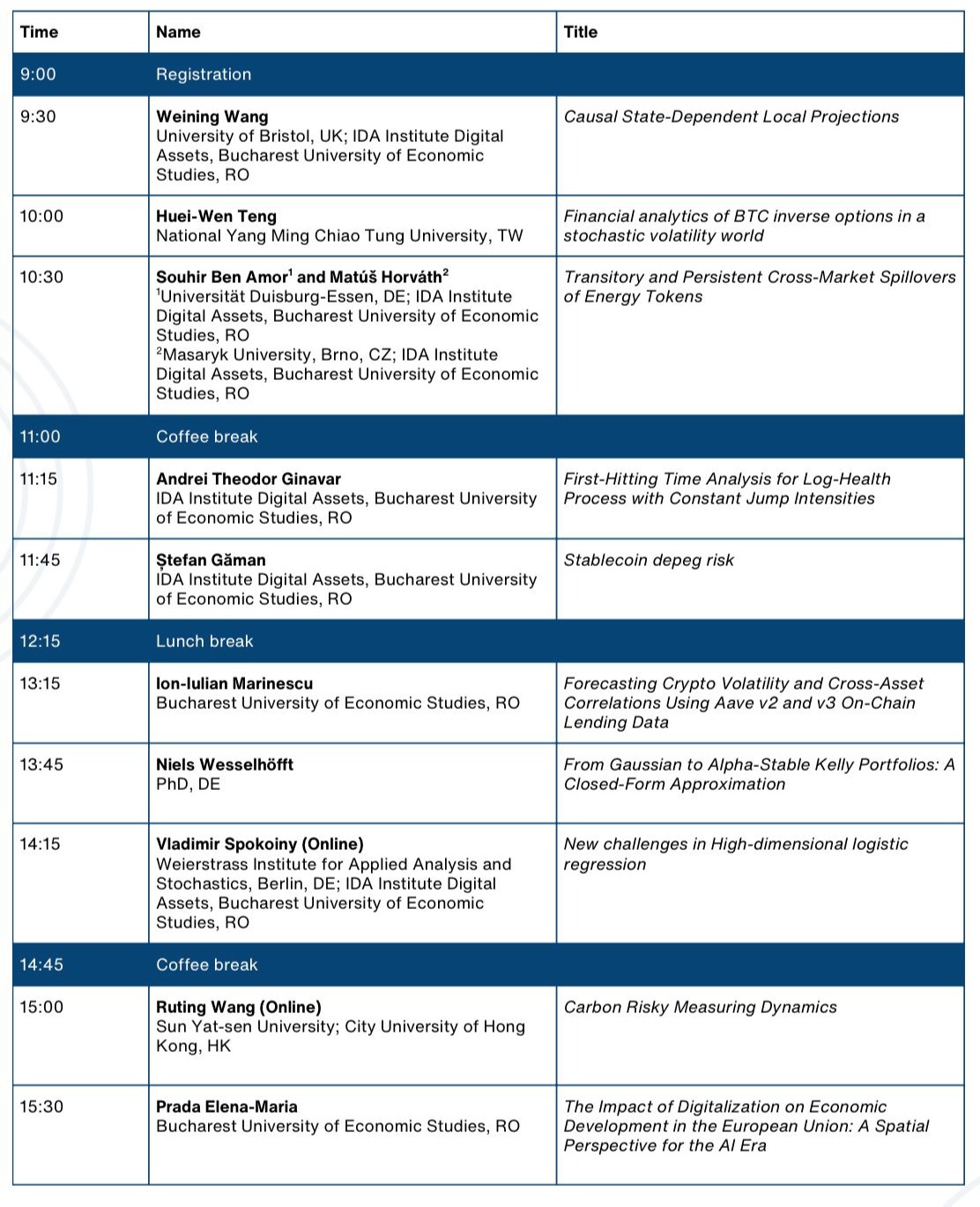
Day 3 (5.6.2026): IDA Institute Digital Assets Workshop, Room B102